
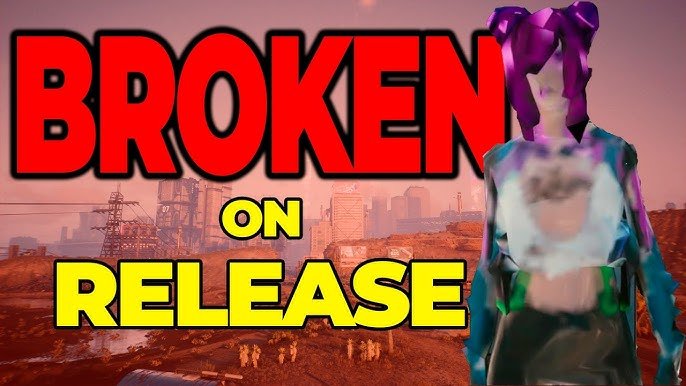
Back in 2020, I preordered Cyberpunk 2077 on PS4, stayed up for the midnight unlock like an idiot, and spent my first hour watching character models flicker through walls and NPCs freeze mid-animation like the world had momentarily forgotten how physics worked. At first I wasn’t even angry, just genuinely confused, because the marketing had promised something so far removed from what was loading on my screen. That night broke a little something in me as a Day One buyer. Since then I have been a lot more careful.
If you’ve experienced that same whiplash—months of hype and then a rocky, patch-dependent launch—you’re not imagining a trend. It’s real, it’s happening more, and there are real reasons why it’s happening that aren’t just “developers got lazy.” I want to walk through what’s really going on behind the scenes, some real examples that demonstrate the pattern clearly, the business incentives that nobody really talks about, and what I’ve personally changed about how I buy games because of it.
It’s Not Really About Laziness; It’s About Timelines.
Here’s the thing, though, that took me a while to actually understand: Most developers aren’t shipping broken games because they don’t care. They ship them because corporate release windows are often set long before development is truly done, based on fiscal quarters, marketing campaigns, and investor expectations that don’t easily shift just because a game needs another six months of polish.
That “we’ll fix it in the patch” mentality has slowly become normalized in the industry, a pattern that began with “we’ll fix it in the mix” in music production and “we’ll fix it in post” in film. A developer at Denki Games who’s also worked on the GTA franchise put it in a way that stuck with me: Games went down the same slippery slope, and when patching post-launch became technically easy, it became an easy pressure valve to meet deadlines that were never really flexible to start with.
The Certification Timeline Nobody Talks About
This part really surprised me when I first heard it, and it’s worth understanding before you assume every day-one patch means a game shipped unfinished. Console games have to go through a certification process with platform holders like Sony and Microsoft weeks before the actual release date so the version submitted for certification is essentially locked in before launch.
That certification lock date is usually way before release. So if a developer discovers and fixes bugs after that submission but before the game reaches players, the fix arrives as a day-one patch—not because the game shipped broken, but because the certification pipeline itself has a built-in lag. Not all day-one patches are red flags. Some are truly normal, healthy last-minute polish that just couldn’t make it into the certified build on time.
That said, and this is the important distinction, a small polish patch is very different from a massive, feature-restoring, performance-overhauling patch. That’s where the real problem shows up.
The Business Incentives Nobody Wants to Say Out Loud
This is the part that I took the longest to be able to accept, because it’s a little cynical. A rough launch often doesn’t hurt a publisher’s bottom line nearly as much as you’d expect. By the time enough players have figured out a game is a mess, a huge chunk of digital preorders and day one sales have already been secured, refund windows on some platforms are short, and the first sales spike that counts the most for quarterly earnings reports has already happened.
That’s not the case for every studio, and I’ve read plenty of interviews with developers who really hate this dynamic as much as players do. But structurally, the pressure to hit a marketed release date can outweigh the desire to delay for polish, particularly when a delay could mean missing a critical holiday sales window or a fiscal quarter deadline shareholders are closely monitoring. Months out, marketing campaigns are built around a specific date, trailers get cut, review embargoes get scheduled, and unwinding all of that to push a release back is a genuinely expensive, complicated decision that leadership doesn’t take lightly, even when the team on the ground knows more time is needed.
Modern Games Are Also Just Bigger and Harder to Test
And apart from the corporate pressure angle, there is a genuinely technical reason this has gotten worse over time. Open-world games especially have become larger in scope with more systems interacting with each other, more platforms to support, and more hardware configurations to consider on PC alone. The more systems you add, the more potential interactions and edge cases need to be tested.
I think people sometimes think QA is just “playing the game a lot.” But it’s more like trying to break the game in every conceivable order and combination on every supported platform in a fixed timeline that doesn’t grow just because the game did. QA teams are often the first areas to be cut when budgets get tight late in development, sometimes being outsourced to third-party testing houses that work from documentation and not from a deep knowledge of the game’s systems. It’s not a knock on outsourced QA testers, who often do genuinely good work under real constraints, but it’s a structural reason bugs slip through that has nothing to do with anyone being lazy.
Live-Service Games Complicate the Picture Further
I want to add a nuance here that I think is lost in a lot of these conversations. Live-service games are designed to be post-launch evolving. A battle royale or looter-shooter that receives balance patches, new content drops, and fixes for months after release isn’t really “unfinished” in the same way a single-player narrative game shipping broken is. That’s the actual business model: ongoing content as a service, not a one-time complete product.
The problem is when that live-service mindset bleeds into games marketed and sold as complete, finished products. Players can reasonably expect a $70 single-player RPG to be whole on day one in a way they don’t necessarily expect out of a free-to-play shooter that’s upfront about its roadmap. A lot of the backlash I’ve seen over the years comes specifically from when a game straddles that line, marketing itself with single-player-style marketing while quietly shipping with live-service-style incompleteness.
The Examples That Actually Show the Pattern
I don’t want to just make claims without backing them up, so here’s a rundown of cases that really show how bad this can get when it’s not just routine polish.
Cyberpunk 2077 (2020) is a game that everyone still talks about, and for good reason. It launched with a massive 43GB day-one patch, and even after that, players and reviewers experienced animation glitches, texture pop-in, and serious crashes, especially on last-gen consoles like the PS4 I was playing on. It’s been a long road of fixes, apologies, and even refunds before the game earned its current reputation as one of the stronger RPGs on the market.
No Man’s Sky is perhaps the most famous redemption story in gaming, but it started out as a cautionary tale first. The first launch was so far removed from its advertised features that it caused a flurry of refund requests and even led to discussions at a government level about how games are advertised. Hello Games spent years making consistent free updates to the game, turning it into what was originally promised, which is genuinely admirable. But it doesn’t erase how rough that launch actually was for early buyers.
The most cited example is Battlefield 2042 (2021), launching with missing features that had been in the genre for decades, with a functioning scoreboard being the most cited example. Not a graphical glitch, not a performance hiccup, but a basic, expected feature simply not there on day one.
Even in 2025 Monster Hunter Wilds followed the same pattern, with an 18GB day-one patch fixing performance issues and missing textures that reviewers had already flagged before launch.
Redfall still managed to be one of the worst-reviewed releases of its year, despite being developed by Arkane, the studio behind truly acclaimed games like Prey and Dishonored. That one hurts more than most, because it wasn’t an inexperienced team making rookie mistakes; it was a talented studio clearly squeezed from outside pressure.
Fallout 76 is another one worth mentioning, because its launch problems went beyond bugs into genuinely broken core systems, and it took Bethesda a long stretch of updates, including eventually adding NPCs to a game that launched without any, to turn it into something resembling what players expected from the franchise.
Pokémon Scarlet and Violet was unique in that it wasn’t just a niche technical issue; frame rate drops and pop-ins were noticeable to literally any player within minutes of starting the game, and the backlash was loud enough that it has genuinely affected how much more cautious the franchise has been with performance since.
PC Players Sometimes Get a Weird Workaround
One thing to keep in mind for PC players, in particular, is that the community modding culture sometimes produces unofficial fixes for broken launches faster than the actual developer. It’s a weird dynamic where you’re relying on volunteer modders to patch a $70 product, and it’s not something I’d recommend relying on as your main game plan, but it’s a very real thing to be aware of if you’re already mod-savvy and a game you own launches in a less-than-ideal state.
Step-by-Step: How I Actually Protect Myself as a Buyer Now
After Cyberpunk, I genuinely changed my buying habits, and I think these steps are worth adopting if you’ve been burned before too.
- Stop preordering by default. I used to preorder anything I was excited about. Now I only preorder when there’s a genuinely low-risk reason to, like guaranteed early access I actually care about from a studio with a strong recent track record.
- Wait for actual performance reviews, not just review scores. A 9/10 review score doesn’t tell you if a game is running at 20fps on your specific platform. Channels that specifically dig into technical performance, frame rate stability, resolution scaling, and that kind of thing are worth checking before you buy, especially for anything graphically ambitious. Digital Foundry is a well-known name in this specific space if you’re not sure where to start looking.
- Check community reaction on launch day itself before buying. Platforms like the game’s own subreddit or Steam’s recent reviews section give you a genuinely fast read on whether something’s broken in ways review embargoes might not have caught in time.
- Give it a few weeks if you’re not in a rush. My personal rule now is waiting at least a few weeks, sometimes a few months, after any major AAA launch before buying. It’s saved me from more than one rough release since I started doing it.
- Consider a subscription service as a low-risk trial for day-one releases. If a game is launching directly into something like Xbox Game Pass, that’s a genuinely smart way to try a day-one release without fully committing your money to it upfront. If it turns out rough, you haven’t lost anything beyond your subscription cost, and if it’s great, you’ve got early access without the preorder risk.
- Understand your platform’s refund policy before you need it. Steam, PlayStation, and Xbox all have different refund windows and conditions. Knowing this ahead of time means you’re not scrambling to figure it out mid-disappointment.
- Read patch notes for day-one updates if you do buy at launch. A patch addressing minor bugs and localization fixes is a very different situation than a patch addressing missing content or fundamental performance problems. The size and content of the patch tell you a lot.
- Watch a launch-day stream or two before buying if you’re still unsure. Watching even twenty minutes of an unedited, unsponsored stream can reveal performance issues or missing features far faster than reading a written review that might not go live until launch day itself.
What This Looks Like From the Developer’s Side
I don’t want this to be a “publishers bad, players good” thing, because that’s not really fair to the people actually making these games. Crunch culture, the practice of working extreme hours to hit a deadline, has been a well-documented problem across the industry for years, and it’s often the direct human cost of the timeline pressures I’ve described above. Developers will often know when a game needs more time and will say so internally, only to be overruled by leadership decisions made for reasons that have nothing to do with the actual state of the product.
From a consumer point of view, that doesn’t excuse a broken launch; you still spent real money on something that didn’t work as advertised. But it’s worth remembering that the individual artists, programmers, and designers on a project are rarely the ones actually making the call to ship early. I think the frustration is better directed at the structural incentives and leadership choices than at the people who built the thing.
Common Mistakes Buyers Make
A few patterns I see constantly and have been guilty of myself:
- Assuming hype trailers reflect actual day-one performance. Trailers are built on high-end dev kits and curated footage, not the experience most players will actually get.
- Treating every day—one patch—as automatic proof of a broken game. As covered above, some patches are just normal certification-timeline polish, not a red flag on their own.
- Buying based purely on a studio’s past reputation. Redfall is the clearest example of why this doesn’t guarantee anything. A great track record doesn’t override external pressure on a specific project.
- Ignoring platform-specific performance differences. A game can run beautifully on one console and poorly on another, or on PC hardware that doesn’t match what reviewers tested on.
- Confusing a live-service roadmap with an excuse for an incomplete single-player release. These are genuinely different situations, and it’s worth holding publishers to different standards depending on which one they’re actually selling you.
- Forgetting that subscription services exist as a lower-risk way to try day-one releases. I skipped this option for years out of habit before realizing it solved most of my launch-day anxiety directly.
My Own Thoughts
Honestly, I don’t think this problem is going to go away anytime soon. Corporate deadlines aren’t getting more flexible, modern games aren’t getting smaller or easier to test, and patching post-launch is just too convenient a safety net for publishers to voluntarily give up. But I don’t think that means all launches are destined to be a mess either. No Man’s Sky proved that a rough beginning doesn’t have to be the end, and plenty of games launch in truly solid shape every year without anyone noticing, because a smooth launch doesn’t make headlines the way a disastrous one does.
The real change has to happen on the buyer side, at least until the industry collectively pushes back enough to change its own incentives. Be a little skeptical, wait for real info before you buy, and use tools like subscription trials and community reaction threads instead of just believing a trailer, and you’ll save yourself a lot of the frustration I felt watching NPCs glitch through walls on launchnite all those years ago. The industry will continue to do what is financially working. As buyers, our job is simply to make the broken version of “what works” less profitable.
My own website link and contact question: http://www.gamingmuzz.com
🏁 Final Thoughts
Games these days are more ambitious and complex than ever, so it’s understandable that some issues slip through pre-release. And players have every right to expect a game to be stable and fun when they pay full price on launch day.
Day-one patches, bugs, stuttering, missing features and performance problems are so common that many gamers have become used to them. But that doesn’t mean developers don’t care, necessarily. Modern AAA games are often very difficult to finish due to tight deadlines, big development teams, complex technology and pressure from publishers.
Hopefully as development tools improve and studios get better at navigating these hurdles, we’ll see fewer games that need weeks or months of updates before they feel truly ready.
What do you think? Is the quality of game launches actually declining, or are games simply becoming too complex to be perfect at release? Leave your opinion about GamingMuzz
🙏 Thank you for reading.
Thanks for taking the time to read this article on GamingMuzz! If you enjoyed it, keep visiting us for more gaming news, guides, hardware discussions, and honest gaming opinions.
We appreciate every reader who supports GamingMuzz. 🎮
📩 Contact GamingMuzz
Have a question, suggestion, correction, or an idea for a future article?
You can reach out to us through the contact details available on GamingMuzz.
For official game information and announcements, always check the developer or publisher’s official website as well.
⚠️ Disclaimer
The information and opinions in this article are provided for general informational and entertainment purposes. GamingMuzz does not claim ownership of third-party games, trademarks, logos, or other copyrighted material mentioned in the article. All respective rights belong to their original owners.
Information about games and the gaming industry can change over time, so readers should check official sources for the latest announcements and updates.
👋 Goodbye & See You Again!
Thanks again for reading GamingMuzz!
If you enjoyed this article, come back soon for more gaming content. We’ll keep covering the games, hardware, problems, and trends that actually matter to gamers.
Until next time, keep gaming and stay tuned to GamingMuzz! 🎮🔥